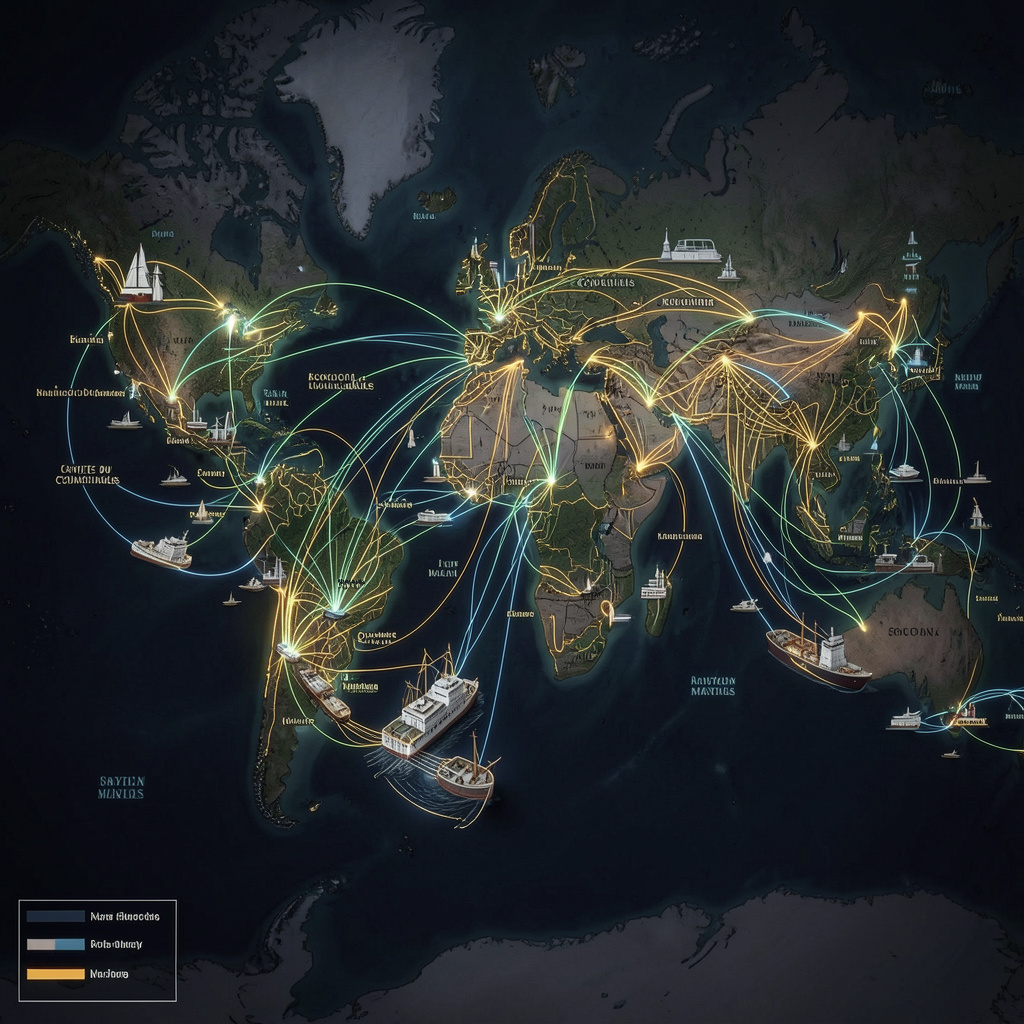
Traditional maritime routes have become permanent military friction zones:
- The African Detour is the New Norm: Due to the persistent crisis in the Red Sea and targeted attacks, most vessels are bypassing the Suez Canal to round the Cape of Good Hope. The result: Asia-Europe voyages are now 10 to 20 days longer on average.
- The Hormuz Breaking Point: The closure of the Strait of Hormuz in early March 2026 has cut off access to 20% of the world’s oil supply and 22% of LNG, paralyzing global energy flows.
- Uncertainty in the South China Sea: As a theater for growing territorial claims, this zone—which represents a third of global maritime trade—is forcing forwarders to prepare costly alternative routing plans.
Protectionism Through Tariffs and Sanctions
Geopolitics is now a direct line item on the transport invoice:
- Trade Wars: Customs tariffs, particularly between Western blocs and China, have shifted from regulatory tools to instruments of political pressure. These “tariff shocks” are forcing companies to relocate or diversify supply sources in record time.
- Sanctions and Blacklists: New sanctions packages require constant monitoring of vessels and cargo. A freight forwarder must now verify the origin of every component to prevent customs seizures.
Concrete Consequences for Shippers
- Agility Over Optimization: “Just-in-time” logistics models are obsolete. The priority has shifted to multimodal flexibility.
- Skyrocketing Distances and Costs: The average distance of global maritime voyages has increased by nearly 10% since 2018 due to strategic rerouting.
- Rate Instability: While some predict a drop in spot rates, political instability can trigger unpredictable price spikes overnight.
Conclusion:
In 2026, choosing a freight forwarding partner means choosing a geopolitical intelligence expert. Added value no longer lies in the negotiated price, but in the ability to secure an alternative route before the primary one is closed by a decree or a missile.
Souhaitez-vous que je propose également des mots-clés (SEO) en anglais pour booster la visibilité de cet article ?