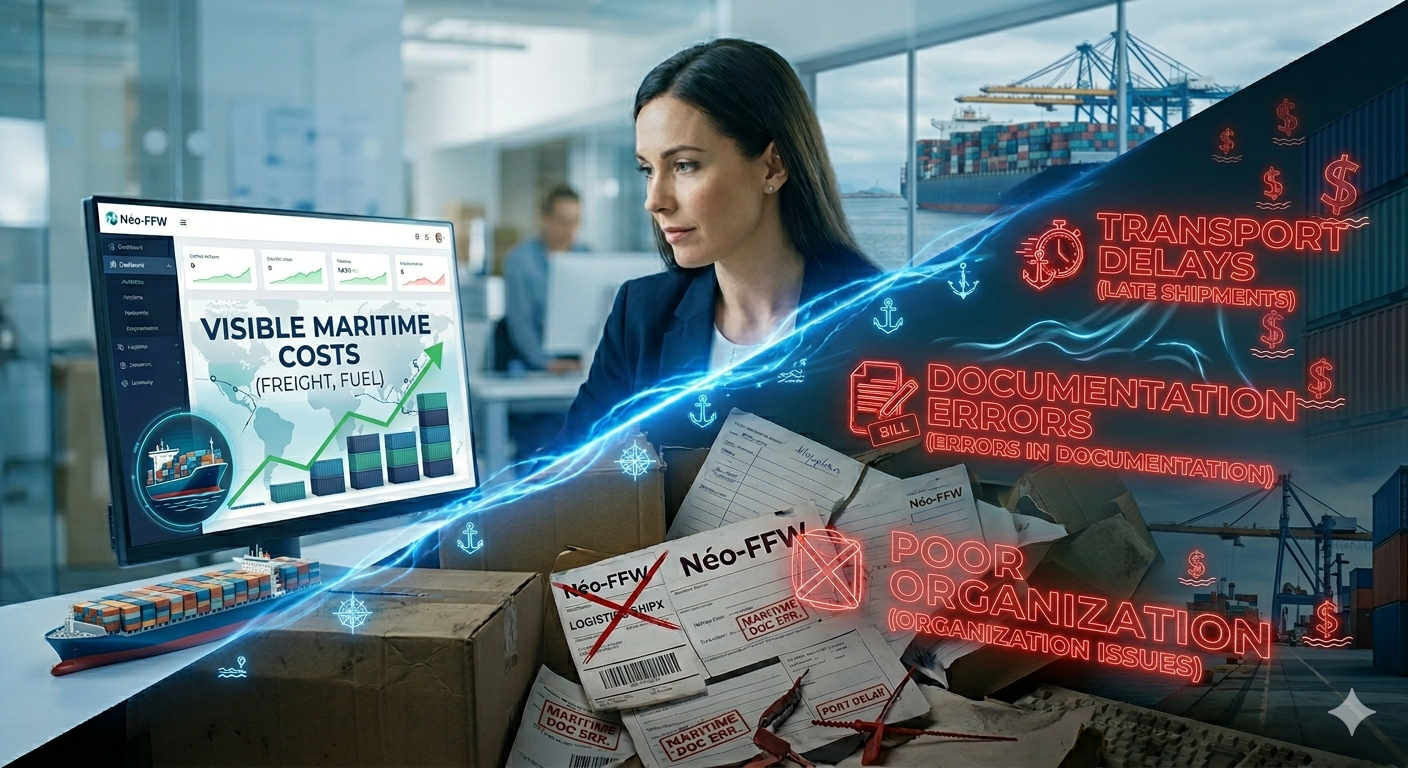
In the Canadian freight forwarding and logistics industry, success is often measured by the precision of your margins. However, a classic management pitfall is focusing solely on visible variable costs: ocean freight rates, fuel surcharges, or drayage fees.
The operational reality is more complex: the true cost of logistics is never the one you see on the initial quote. It is insidious, hidden within the folds of heavy administration and fragmented communication.
1. The “Invisibility Tax”: The High Price of Missing Data
Imagine an iceberg. The tip represents your visible direct transport costs. The massive part below the surface represents your friction costs.
Every time a team member has to open three different spreadsheets to confirm a container’s status, or an “urgent” client email sits unanswered for two hours, your company is paying an invisibility tax.
- Information Latency: In logistics, not knowing is not being able to anticipate. Information that arrives too late inevitably transforms into avoidable demurrage fees, detention charges, or missed delivery windows.
- Workflow Gaps: Moving data manually between Excel, port portals, and accounting software creates silos. These silos are the breeding grounds for entry errors that—by the time they reach invoicing—require hours of manual correction.
2. The Butterfly Effect: When Small Errors Become Financial Gaps
The second critical point is often underestimated: the cost of disorganization. In a high-volume environment, a 1% data entry error can lead to a 20% loss on a file’s operational margin.
Why? Because a documentation error or a organizational slip-up never stops at the moment it occurs. It triggers a costly chain reaction:
- Operational Delays: The truck waits, the vessel sails, or CBSA (Customs) holds the cargo.
- Correction Costs: You must mobilize a senior specialist to fix the issue under pressure.
- Client Impact: Trust erodes, often forcing commercial gestures or discounts that eat away at your bottom line.
This is where technology stops being a “luxury” and becomes a financial shield.
3. Neo-FFW: Turning Visibility into Net Profit
The Neo-FFW approach isn’t just about digitizing documents; it’s about cleaning up the entire decision-making chain. By centralizing information, you eliminate the root cause of hidden costs.
- Process Standardization: By guiding users through optimized workflows, the software drastically reduces the probability of human error.
- Real-Time Centralization: No more “searching” for info. It’s right there, shared between all stakeholders. This transparency reduces unnecessary back-and-forth and allows your team to handle a higher volume of business with the same resources.
- Billing Precision: By linking operations directly to finance, Neo-FFW ensures every service rendered is billed at the right amount, at the right time, with the correct GL codes.
Conclusion: Profitability Through Clarity
The future of Canadian logistics won’t be won by truck engine power alone, but by the speed and accuracy of data. Investing in a tool like Neo-FFW means choosing to see the entire iceberg.
By eliminating the hidden costs associated with delays and poor organization, you aren’t just simplifying your day—you are protecting your margins and providing the reliability your clients demand in a competitive market.
Stop letting hidden costs drain your margins
Are you ready to trade manual chaos for digital precision? Discover how Neo-FFW centralizes your operations and automates visibility for real, immediate ROI. 👉 Info@neo-6.com